
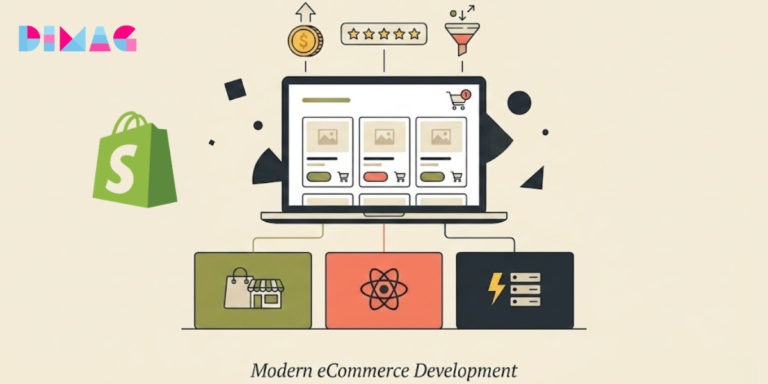
Choosing an eCommerce website development company near me is one of the most consequential decisions a business makes during a growth phase. The wrong partner delivers a slow store that frustrates buyers and drags conversion. The right partner delivers a build that converts visitors, scales with the business and stays maintainable for years.
Most businesses approach this decision by collecting three quotes, comparing prices and picking the lowest-priced credible option. The decision feels rational. It rarely produces the right outcome. Price comparisons tell you what providers cost. They tell you nothing about discovery depth, technical decision quality, performance standards, post-launch support model or the operational discipline that separates a successful build from a delayed project.
This guide breaks down what separates strong eCommerce development partners from average vendors, how to evaluate local providers before signing, the realistic project timeline and the common mistakes that turn promising builds into over-budget engagements.
What Separates a Strong eCommerce Development Partner From a Vendor
A vendor delivers what was asked for. A partner delivers what the business actually needs. The difference shows up across three operating practices that survive the entire engagement and define whether the build holds up under real traffic and conversion conditions.
Strategic Discovery Before Production
Strong partners run a structured discovery phase before any design or development begins. The discovery covers business model, target buyer personas, competitor analysis, technical infrastructure assessment and conversion blockers in any existing site. The output is a documented brief that informs every subsequent decision. Vendors skip discovery to save time and deliver against the original RFP. The build looks like what was specified. It rarely produces what the business actually needs.
Technical Architecture Decisions Made With the Buyer
Choices about platform (Shopify, WooCommerce, Magento, custom), hosting, payment gateway integration, inventory sync and third-party service connections shape what the site can do for years after launch. Strong partners explain the tradeoffs of each choice with the buyer present, document the reasoning and get explicit signoff on architecture before development begins. Vendors make architecture decisions internally and present the build as a finished product. The choices that were made cannot be reversed without rebuilding.
Performance and SEO Standards Built Into the Build
Page speed, mobile usability, conversion-relevant metrics like time to interactive and SEO foundation elements get engineered into the build during development, not after launch. Acceptance criteria specify thresholds verifiable through Google PageSpeed Insights and Core Web Vitals: largest contentful paint below 2.5 seconds, interaction to next paint below 200 milliseconds, cumulative layout shift below 0.1 and mobile Lighthouse score above 85. Schema markup, internal linking architecture, crawl-friendly URL structure and indexability rules get configured during development rather than retrofitted after launch. Vendors treat performance and SEO as post-launch concerns. The store launches, ranking and performance issues surface together, fixes happen weeks later under stress.
How to Evaluate Local eCommerce Development Companies Before Signing
Three signals during evaluation reveal whether the provider operates as a partner or as a vendor. Specific portfolio examples and reference conversations answer these questions. Capability claims do not. The same evaluation discipline used for the broader SEO services company evaluation framework applies here: judge by demonstrated examples, not by sales decks.
Portfolio Depth in the Specific Platform
A provider that has built five stores on the platform under consideration brings repeatable execution. A provider that built one store three years ago brings learning-curve risk. Ask for at least three live examples on the target platform, with launch dates, current traffic ranges and the scope of work involved. The portfolio depth determines how predictable the engagement will be.
Live Case Studies With Measurable Outcomes
Request examples where the build produced documented outcomes: organic traffic growth post-launch, conversion rate improvements, page speed gains compared to the prior site or sales acceleration that traced to the build. Strong partners share specific numbers with named (or anonymized) clients. Vendors share screenshots of finished sites without conversion or performance data attached. The difference reveals whether the provider thinks of itself as a builder or as a growth contributor.
Post-Launch Support Model
Builds need ongoing optimization. Code dependencies need updates. Security patches need application. Third-party integrations occasionally break. Performance baselines drift. The post-launch support model defines whether these get handled or whether the site decays months after launch. Ask explicitly what is included in post-launch support, how response times are guaranteed and what happens when emergency issues arise outside business hours. Ongoing monitoring should include Article and Product structured data validation to keep rich result eligibility intact through every site update.
Red Flags That Signal Project Risk
Three patterns reliably predict that an engagement will deliver late, over budget or below acceptance standards. Spotting them during evaluation prevents months of expensive recovery work after signing.
Discovery Skipped or Compressed
The provider proposes jumping straight from kickoff to design without a documented discovery phase. The reasoning offered is usually time savings or readiness from the RFP detail. The actual cost is design and development decisions made without the strategic context that should inform them. Discovery is the foundation. Engagements that skip it pay for it later through scope creep, rework and missed business requirements.
Vague Technical Recommendations
The provider recommends a platform without articulating why it fits the business. The technical proposal lacks specifics on architecture, integrations, hosting setup and security model. Acceptance criteria for performance and quality are not defined. When asked detailed technical questions, the response stays at the surface. Generic technical proposals usually mean generic technical execution.
No Defined Performance Acceptance Criteria
The proposal does not specify what constitutes acceptable performance before launch. Page speed, Core Web Vitals, mobile usability, accessibility and conversion baselines are not committed to. Without acceptance criteria, anything technically functional gets approved as done. Performance fixes then become out-of-scope add-ons after launch when the cost of remediation is highest and the disruption to live traffic is greatest.
Realistic Project Timeline From Kickoff to Launch
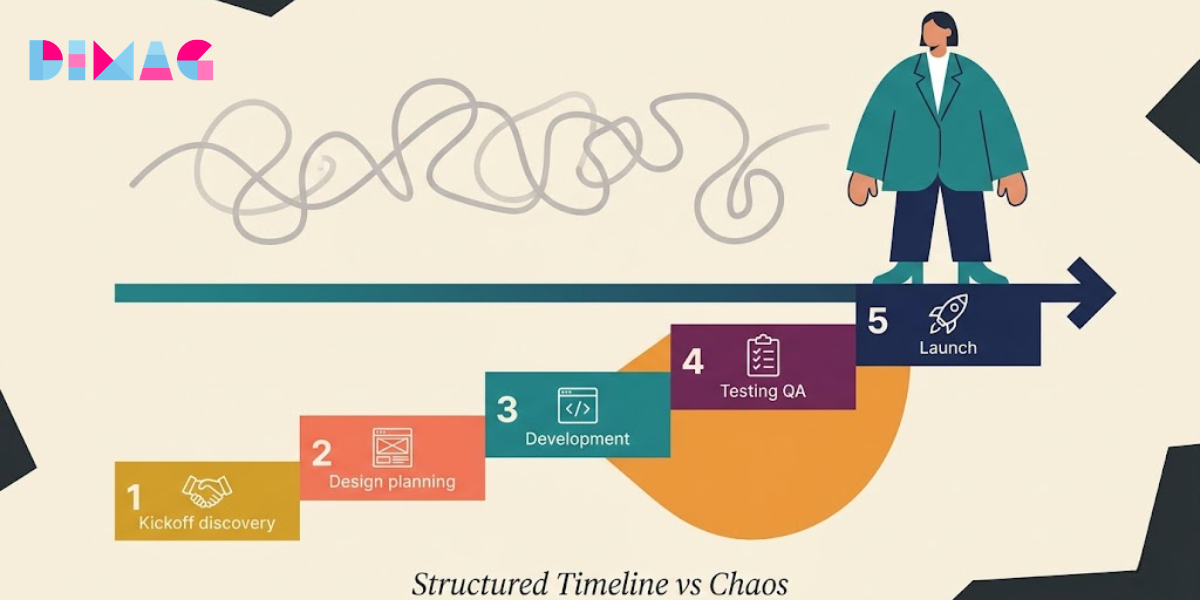
Most eCommerce builds compress timelines artificially and pay for it through quality and stability issues post-launch. A realistic timeline for a medium-complexity build follows a predictable three-phase structure.
Discovery and Architecture Phase
Stakeholder workshops complete. Business requirements get documented. Technical architecture decisions get made and signed off. Wireframes for key page templates get approved. Acceptance criteria for performance and quality get defined. Distribution channels and analytics infrastructure get planned. The phase ends with a complete blueprint that development can execute against without midway decision-making.
Design and Development Phase
Visual design completes for all major page templates and component libraries. Front-end development implements the design with attention to mobile responsiveness and accessibility. Back-end development implements catalog management, checkout flow, payment processing and integrations. Continuous deployment to a staging environment lets stakeholders review progress weekly. The phase ends with a feature-complete site in staging.
QA, Migration and Launch Phase
Performance testing runs against acceptance criteria. Cross-browser and cross-device testing complete. Security testing addresses common vulnerabilities. Content migration from the existing site happens. SEO redirects from old URLs get configured. Final stakeholder sign-off happens. The site launches with monitoring active and a defined rollback plan if issues surface within the first hours of traffic.

Common Mistakes Businesses Make When Hiring eCommerce Developers
Three patterns reliably destroy value in eCommerce development engagements. Recognizing them early prevents months of expensive recovery work.
Hiring Based on Lowest Quote
The lowest quote rarely represents the lowest total cost. Six months into a build that needs rework, the lower-priced provider has cost more than the higher-investment partner who would have delivered a stable build on the first pass. The deciding factor should be operational discipline, technical depth and proven post-launch support, not the initial quote size.
Skipping Reference Checks With Live Clients
Many businesses commit to a provider based on pitch decks and portfolio screenshots without ever talking to past clients. References reveal what the engagement experience actually was: response time during issues, scope discipline during the build, post-launch support quality and how the relationship held up under stress. Two reference conversations with past clients matched to the current business profile produce more decision signal than any sales call.
Treating Launch as the End of the Engagement
A live site is not a finished site. The first 90 days post-launch reveal performance issues, conversion blockers, integration edge cases and content gaps that only surface under real traffic. Engagements structured to end at launch leave the business handling these discoveries alone. Engagements that include 90-day post-launch optimization deliver a substantially better stable state.
How DiMag AI Can Help
DiMag AI builds eCommerce sites with SEO architecture, performance standards and conversion infrastructure engineered into the build from day one rather than retrofitted after launch. Schema markup, internal linking architecture, page speed targets, Core Web Vitals acceptance criteria and indexability rules get defined during discovery and verified throughout development. The site launches ranking-ready with the SEO foundation already in place, not as a separate post-launch project. Discovery comes before design. Technical architecture decisions get made with the buyer present and documented. Post-launch optimization continues for 90 days on real-world performance, conversion behavior and search visibility together. The shift toward AI-driven search detailed in AEO vs SEO directly affects how new eCommerce sites need to be structured for discoverability across traditional search and answer engines in 2026, making integrated SEO and development more important than ever.
Frequently Asked Questions
Q1. What does a reliable eCommerce website development company near me typically deliver?
A. A reliable eCommerce website development company near me delivers structured discovery before production, transparent technical architecture decisions, documented performance acceptance criteria, comprehensive QA before launch and a defined post-launch support model. The work includes the actual build plus the strategic context that makes the build successful for years rather than the initial launch period alone.
Q2. How long does an engagement with an eCommerce website development company near me take?
A. Most medium-complexity eCommerce builds take 12 to 16 weeks from kickoff to launch when discovery is included. Compressed timelines below 8 weeks usually skip discovery and produce builds that need extensive rework post-launch. Larger builds with custom integrations or migrations from complex existing systems may extend to 20-24 weeks for full delivery.
Q3. How can businesses tell if a local eCommerce developer is the right fit?
A. Three signals identify fit: portfolio depth on the specific platform under consideration, live case studies showing measurable outcomes from prior builds and a defined post-launch support model with explicit response times. Strong fit also shows up in how the provider answers technical questions during evaluation. Specific architectural reasoning indicates depth. Surface-level answers indicate generic execution.
Q4. What questions should businesses ask an eCommerce development partner before signing?
A. Three questions reveal the operating model: how the provider structures the discovery phase, what acceptance criteria they commit to for performance and quality and what post-launch support actually includes. Specific examples from past engagements answer these questions. Capability claims do not.
Q5. Why does local matter when choosing an eCommerce development partner?
A. Local matters for businesses that need in-person workshops during discovery, time zone alignment for daily communication or compliance with regional regulations on data handling. Local matters less for projects where async communication works, the platform is widely supported and the work product can be reviewed remotely. The decision should be made on operating fit, not geographic convenience alone.
Q6. What determines the total cost of an eCommerce website development engagement?
A. Total cost depends on platform choice, integration complexity, design depth and ongoing support requirements. Hosted platforms like Shopify reduce upfront cost but add ongoing platform fees. Custom or open-source builds have higher upfront cost with more flexibility. The relevant question is not the absolute budget but whether the proposal includes the discovery, performance acceptance criteria and post-launch support that determine total cost of ownership over a 3 to 5 year window.
