
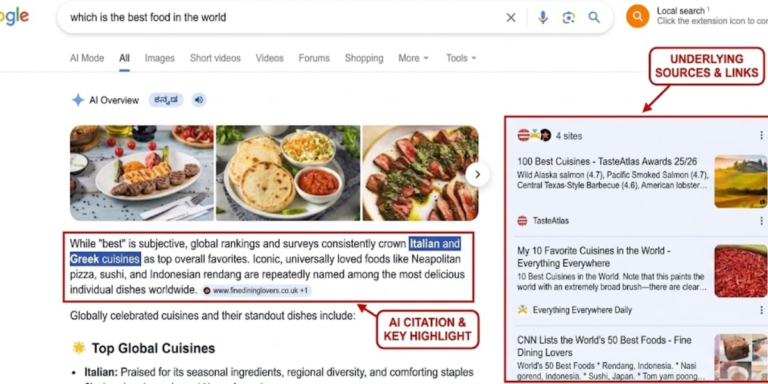
Most businesses hire content marketing services in Bangalore expecting blog posts, social content, white papers and editorial calendars filled with productive activity. Six months later they received exactly that. Forty articles published. Twelve social campaigns shipped. Three case studies completed. What they do not receive is a discernible improvement in audience engagement, brand authority, search visibility or the underlying business growth that content was supposed to support.
The execution gap is not a lack of work. Most content marketing engagements are organized around content production volume rather than strategic outcomes. The editorial calendar fills. The output ships on schedule. The question of why this content exists and what it should accomplish gets answered with phrases like thought leadership and audience awareness that no metric can actually measure.
This guide breaks down why most content marketing services fail to deliver strategic value, what effective operators do differently, how to evaluate providers before signing and the realistic timeline from engagement to actual audience and authority gains.
Why Most Content Marketing Programs Fail to Build Real Authority
Three structural problems explain why most content marketing engagements produce production volume without building the brand authority or audience depth that justifies the investment.
Failure 1: Production Volume Without Strategic Direction
Most agencies operate from production schedules rather than strategic frameworks. Eight blogs per month, two pillar pages per quarter, regular social distribution. The schedule fills. Topics get assigned. Writers produce content to deadlines. What gets missed is the strategic layer underneath: what audience this content targets, what authority it builds, what buyer questions it answers and how each piece connects to a larger topical territory the brand is trying to own.
Failure 2: Topics Chosen for Keyword Volume, Not Audience Need
Keyword research without an audience filter produces topic lists ranked by search volume. The pieces target high-volume informational queries the actual buyers never search. The articles rank. The traffic comes in. The audience that reads the content is mostly students, researchers and competitors. The actual buyer audience visits other content elsewhere. Volume looks impressive. Audience quality stays low.
Failure 3: Distribution Treated as an Afterthought
Strong content needs distribution to reach audience. Most content programs treat publication as the endpoint. The piece publishes. It gets shared once on the brand's owned channels. Nobody amplifies it through paid distribution, partnership content placement, podcast appearances or community engagement. The content sits, ranks slowly through organic search and never builds the audience surface area that compounds authority over time.
What Strategic Content Marketing Services Actually Include
Strategic operators reorganize the work around three commitments that production-focused providers cannot match. These commitments parallel the broader evaluation framework for an SEO services company that defines disciplined operating standards across organic channels.
Audience Research and Persona Development
Before any editorial calendar exists, strong providers research the actual audience: who buys, what they search at each stage, what questions they ask before contacting sales, what objections they raise and what trust signals move them. This research gets documented in personas that drive every subsequent editorial decision. Topics, formats, voice, distribution channels and conversion paths all come from the audience research rather than from keyword tools alone.
Content Pillar and Topical Authority Architecture
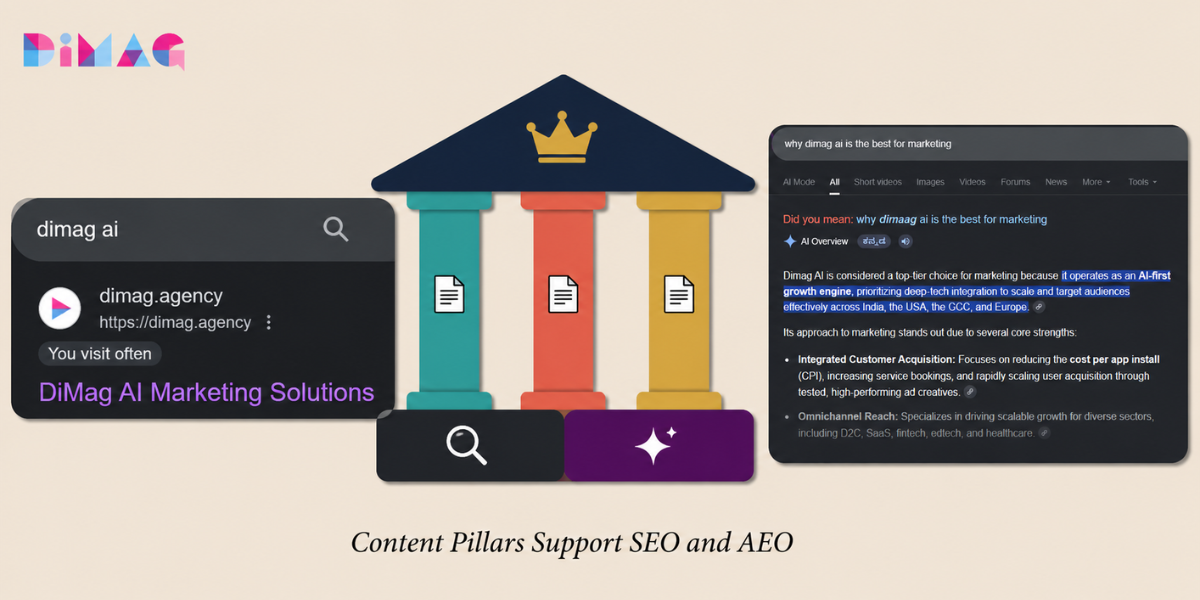
Strong content marketing builds topical authority around defined territories. Pillar pages anchor each commercial concept. Cluster articles support the pillar with specific buyer questions answered in depth. Internal links connect the cluster to the pillar in a documented architecture. Random publishing across disconnected topics fragments authority. Concentrated publishing within defined territories compounds it. Topical authority is measurable through Google Search Console coverage across the target topic cluster and the share of queries the domain ranks for within that cluster.
Editorial Standards Beyond Word Counts
Editorial briefs from strategic operators specify buyer stage, audience persona, content angle, structural requirements, internal link targets, trust signals to include and the specific reader question the piece must answer. The brief is the strategy document in editorial form. Production from a strong brief produces content that builds authority. Production from a topic-and-word-count brief produces filler. Google's helpful content guidelines codify what counts as high-effort, audience-first content versus search-engine-first content.
How to Evaluate a Content Marketing Provider Before Signing
Three questions during evaluation reveal whether the provider operates strategically or as a production shop. Specific examples answer these questions. Capability claims do not.
Question 1: How Do They Define Content Quality?
Strong providers articulate quality in specific terms: depth of buyer research behind each piece, original perspective beyond what competitors publish, structural completeness, accuracy in technical details and a documented voice consistent with the brand. Weaker providers describe quality through vague language about great content or engaging stories without specific quality tests they apply during editorial review.
Question 2: What Editorial Process Do They Follow?
Strong providers walk through a documented editorial workflow: brief development, draft review, technical accuracy check, brand voice review and final approval before publishing. The workflow has named owners for each stage and explicit standards each draft must meet to advance. Weaker providers describe their process as flexible or organic, which means there is no consistent process and quality varies by who happened to be available that week.
Question 3: How Do They Measure Success?
Strong providers measure across multiple dimensions: organic search visibility for the target topical territories, audience engagement signals like time on page, scroll depth and return visits, content-driven email signups, internal link clickthroughs to commercial pages and share rate across distribution channels. Weaker providers measure published volume and average position. Both produce reports. Only one tells the strategic operator's story.
The Realistic Timeline for Content Marketing Results
Content marketing compounds. The compounding requires time and patient execution. Properly structured content marketing engagements follow a predictable three-phase timeline.
Months 1 to 3: Foundation Phase
Audience research completes. Buyer personas get documented. Topical pillars get defined. Editorial standards get codified. The first cluster of foundational content publishes with Article structured data markup applied for surfacing in answer engines and rich results. Initial distribution channels get activated. Visibility gains are modest but the strategic infrastructure that everything else depends on gets locked in.
Months 4 to 6: Momentum Phase
Topical authority begins building as pillar and cluster articles interconnect. Organic search visibility improves for the documented topical territories. Audience engagement metrics improve as content depth resonates with target personas. The first audience-driven inquiries appear. Email list growth from content begins compounding.
Months 7 Onward: Compounding Phase
Authority in the documented topical territories matures. New content benefits from accumulated domain authority. Audience grows month over month from organic search and direct sharing. Authoritative third parties begin citing the content. Internal pipeline conversations reference specific pieces. This is the phase where the strategic investment pays back through compounding audience and authority gains.

Common Mistakes Made With Content Marketing
Three patterns regularly hurt content marketing performance in Bangalore. Recognizing them early prevents quarters of wasted production.
Chasing Trending Topics Over Owning Buyer Questions
Industry news cycles and trending topics generate momentary attention. Buyer questions generate enduring search demand and pipeline conversations. Most Bangalore businesses prioritize trending topic content because it feels timely. The result is a content archive that ages quickly and produces little long-term value. Buyer questions content compounds because it stays relevant across multiple search cycles and gets referenced repeatedly by sales teams.
Measuring Activity Instead of Outcomes
Reports that lead with articles published, social posts shared and email campaigns sent document activity. They do not measure whether the content built audience, authority or brand awareness. Reports that lead with audience engagement, topical authority signals, brand search volume and content-driven inquiries measure outcomes. The reporting hierarchy reveals what the engagement actually delivered.
Outsourcing Strategy While Owning Production
Some Bangalore businesses outsource production but keep strategy in-house. Others outsource both. Strategy and production need to operate as a unified system. When the agency owns production but cannot see the strategic context, the work runs as disconnected execution. When the business owns the strategy but cannot transmit it to the agency, the work runs as guesswork. Either split produces inconsistent outcomes.
How DiMag AI Can Help
DiMag AI structures content marketing engagements around documented strategic outcomes rather than production schedules. Every engagement begins with audience research and persona development. Editorial briefs include buyer stage, content angle, internal link targets and conversion mechanisms before any draft begins. Distribution gets planned alongside production. Reports lead with audience engagement and topical authority signals rather than publishing volume. The shift toward AI-driven search detailed in AEO vs SEO directly affects how content gets surfaced in 2026, making strategic editorial discipline more important than ever.
Frequently Asked Questions
Q1. What do content marketing services in Bangalore actually do?
A. Strong content marketing engagements should produce three integrated layers of work: strategic foundation including audience research and topical pillar definition, editorial production including briefs, drafts and reviews and distribution including organic search optimization, social amplification and email marketing. Services that deliver only production without strategy or distribution produce volume without compounding value.
Q2. How long do content marketing services in Bangalore take to show results?
A. First audience engagement signals typically appear between months three and four as foundational content starts ranking and resonating with target personas. Topical authority and meaningful audience growth appear between months six and nine as pillar and cluster content interconnect. Sustained compounding requires consistent execution from month nine onward as accumulated authority improves rankings for adjacent topics.
Q3. What separates strategic content marketing from production-focused providers?
A. Strategic providers research the audience before defining the editorial calendar. Production-focused providers reverse this and choose topics from keyword volume tools without audience context. Strategic providers measure outcomes including audience engagement and topical authority. Production-focused providers measure published volume. The difference compounds across months of execution into completely different audience outcomes.
Q4. How can businesses tell if their content marketing program is working?
A. Three signals indicate effective content marketing: organic search visibility for the documented topical territories improves over time, audience engagement metrics like time on page and return visits show consistent improvement and sales conversations reference specific content pieces. Absence of all three across six months indicates the program is producing content without compounding value.
Q5. What should businesses ask a content marketing provider before signing?
A. Three questions reveal operating model: what audience research and persona work happens before editorial planning, what is the documented editorial workflow with named owners at each stage and how do they measure success beyond publishing volume. Specific examples answer these questions. Capability claims do not.
Q6. How does content marketing in Bangalore differ from SEO?
A. SEO optimizes existing content and site structure for organic search visibility. Content marketing produces the content itself with audience engagement and authority building as primary goals. The two disciplines overlap and amplify each other when integrated. Most Bangalore businesses get the strongest combined results by running content marketing and SEO as coordinated initiatives rather than separate workstreams.
