
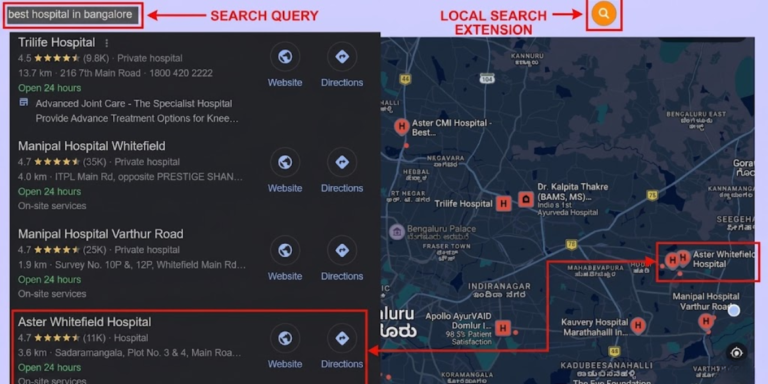
The local search landscape has grown more competitive every year as business density across IT services, real estate, healthcare, manufacturing and D2C retail keeps expanding. Local SEO services multiplied to meet the demand. The outcomes did not keep pace. Most engagements deliver rankings and traffic without producing the customer inquiries and revenue that justified the investment.
The problem is not lack of effort. Most providers run the same playbook: Google Business Profile claims, generic citation submissions, template content with city name substitutions and monthly reports that document activity rather than outcomes. The playbook produces visibility. It does not produce pipeline because rankings and traffic do not automatically become customer inquiries. Without conversion tracking, intent-aligned content and pipeline-connected reporting in place, the work stops at the impression and never translates into actual revenue.
Revenue-focused local SEO services operate differently. Every component connects to documented business outcomes. Every monthly report leads with customer inquiry attribution. Every optimization decision gets evaluated against pipeline contribution, not ranking position. This guide breaks down what that operating model looks like and how to identify providers that actually deliver it.
Why Most Local SEO Services Fail to Drive Revenue
Three structural problems explain why most local SEO engagements produce activity without business outcomes. Each shows up consistently across providers regardless of price point or stated specialization.
Generic Playbooks Applied to Specific Industry Verticals
Local economies span IT services, pharmaceuticals, real estate, education, manufacturing and rapidly growing D2C retail. Each vertical has distinct buyer behavior, search patterns and conversion triggers. Generic local SEO templates that treat a software firm the same as a real estate agency miss the vertical nuances that actually drive results. The execution looks competent. The pipeline stays flat.
Citation Volume Over Citation Relevance
The first deliverable in most local SEO engagements is a list of citations built across business directories. Quantity gets celebrated. Relevance gets ignored. Relevance comes down to three measurable signals: directory Domain Authority above 30, the directory's organic rankings on the target vertical's queries and verifiable traffic from the relevant geographic market. Citations from directories weak on any of these signals add zero ranking value. Quality citations in industry-specific directories and locally focused business listings move rankings. Generic citation volume produces reports that look thorough and rankings that do not move.
Reports That Document Activity Instead of Outcomes
Monthly reports list citations built, content published, technical fixes implemented and ranking changes. What does not appear: which specific customer inquiries came from organic local search, what pipeline value organic visibility produced and what cost per acquisition the channel delivered. Without these business metrics, the engagement runs on the assumption that activity equals progress. Six months later the assumption gets tested when leadership asks for revenue contribution.
What Revenue-Focused Local SEO Services Should Look Like
Revenue-focused operators reorganize the work around three commitments that activity-driven providers cannot match. These commitments mirror the broader revenue-focused approach to SEO services that defines operating discipline across both general and local search engagements.
Vertical-Specific Keyword and Content Strategy
Strong providers research keywords by buyer journey for the specific local vertical the business operates in. A SaaS company gets different commercial keywords than a residential real estate firm. The keyword list contains fewer terms than the volume-driven version but every term connects to documented buyer intent for that industry segment. The Google Business Profile gets categorized and described to reinforce the vertical positioning. Content production gets directed at terms that produce qualified inquiries.
Conversion Tracking Configured Before Content Production
Phone call tracking, form submission attribution, Google Business Profile inquiry tracking, direction request counting and review-driven contacts all need configured measurement before content production begins. Without this measurement infrastructure, no later month can demonstrate business outcomes. Revenue-focused providers complete this setup in the first two weeks. Activity-focused providers skip it because the work is not visible in monthly reports.
Reports That Lead With Pipeline Contribution
Monthly reports from revenue-focused providers lead with customer inquiries attributed to organic local search, pipeline value created, cost per acquisition through the channel and trends in qualified contact volume. Position tracking and traffic data appears as supporting context, not as the lead metric. The reporting hierarchy reveals what the operator considers important.

How to Evaluate Local SEO Services Before Signing
Three questions during evaluation reveal whether the provider operates as revenue-focused or activity-focused. Specific examples answer these questions. Capability claims do not. These questions complement the broader evaluation framework for an SEO services company that covers the five core capabilities every serious agency should demonstrate.
How Do They Handle Vertical-Specific Buyer Research?
Ask the provider to walk through their keyword research approach for a specific local vertical, ideally yours. Strong providers explain buyer personas, journey stages, intent classification and how keywords map to commercial outcomes for that industry. Weaker providers offer generic SEO frameworks that work for any industry without explaining the specifics that differ between a real estate firm and a healthcare practice.
Can They Demonstrate Conversion Attribution From Prior Engagements?
Ask for proof that previous client engagements connected local SEO activity to closed business. Revenue-focused providers show specific examples where organic local search activity traced to customer inquiries, pipeline value and closed deals. Activity-focused providers present ranking improvements and traffic case studies without the conversion attribution that demonstrates business impact.
What Reporting Cadence and Format Do They Actually Use?
Request sample reports from existing engagements. Strong providers share examples that lead with customer inquiry attribution and pipeline contribution metrics. Weaker providers share dashboards that lead with rankings, traffic and impression counts. The sample reveals the operating model. If the sample report cannot answer whether organic local search produced customer inquiries this month and what their pipeline value was, the operating model is activity-driven regardless of stated capability.
Realistic Timeline From Engagement to Revenue Contribution
Local SEO delivers measurable results faster than general SEO because local search has fewer competitors per geographic-vertical combination. The typical engagement follows a predictable three-phase timeline. The same three-phase pattern holds across affordable local SEO services engagements, since timing depends on execution discipline more than on retainer size.
Months 1 to 2: Foundation and Measurement Phase
Google Business Profile claims and optimizations complete in week one. Conversion tracking infrastructure gets configured and tested. Vertical-specific keyword research and intent mapping completes. Top-priority citations get built in locally relevant and industry-specific directories. Technical site foundations get assessed through Google Search Console and PageSpeed Insights, with critical issues addressed inside the phase. The first geo-targeted content pieces get published with local business structured data markup applied. Visibility gains during this phase are modest but the foundation that everything else depends on gets locked in.
Months 3 to 4: Visibility and Inquiry Phase
Local rankings begin moving for vertical-specific local search terms. Map pack appearances start showing up for high-intent local queries. Google Business Profile insights show increased searches and direction requests from across the local market. The first organic-attributed customer inquiries begin appearing in CRM data. This is the phase where foundation work converts into measurable visibility.
Months 5 Onward: Compounding Revenue Phase
Local rankings stabilize at improved positions across both general and vertical-specific keywords. Customer inquiry volume reaches a level that justifies the investment. Cost per acquisition through organic local search drops below paid channels. The compounding effect kicks in as accumulated authority improves rankings for adjacent vertical keywords. The engagement pays back its setup investment through attributed pipeline by month six.

Common Mistakes Businesses Make With Local SEO
Three patterns regularly hurt local SEO performance. Recognizing them early prevents quarters of wasted investment.
Choosing Providers Based on Price Comparison Alone
The lowest-cost provider rarely produces the lowest-cost outcome. Six months of activity that does not move pipeline costs more in lost opportunity than higher-investment work that delivers measurable results. The deciding factor should be operational discipline, not retainer size. Whether the provider runs setup work in week one and reports pipeline contribution by month three matters more than the monthly fee.
Treating Local SEO as a One-Time Setup Project
Many businesses approach local SEO as a finite project with a defined end point. Google Business Profile gets claimed. A few citations get built. Initial content gets published. The work stops. Local SEO requires ongoing optimization across reviews, content, technical health, citation refresh and Google Business Profile updates. Engagements that end after setup produce a brief visibility bump followed by gradual decay as competitors keep optimizing.
Skipping Conversion Tracking to Save Setup Time
The most damaging cost-cutting decision is skipping conversion attribution setup. Without it, no later month can demonstrate whether organic local search drove customer contacts. The engagement runs on assumption rather than data. By the time leadership demands evidence of business impact, several months of work have happened without the measurement to evaluate it. The fix at that point requires both setting up tracking and waiting another quarter for sufficient data.
How DiMag AI Can Help
DiMag AI structures every local SEO engagement around revenue contribution from day one. Conversion tracking gets configured before content production begins. Keyword research starts with vertical-specific buyer journeys for the local market the business operates in. Citation building focuses on relevance over volume. Reports lead with customer inquiry attribution and pipeline contribution rather than position tracking. The shift toward AI-driven results discussed in AEO vs SEO directly affects how local queries get answered in 2026, making attribution discipline more important than ever.
Frequently Asked Questions
Q1. What do effective local SEO services actually deliver?
A. Effective local SEO services deliver customer inquiry attribution from organic local search, vertical-specific keyword strategy, ongoing Google Business Profile optimization, relevance-focused citation building, conversion tracking infrastructure and monthly reports tied to pipeline contribution. The deliverables shift from activity volume to business outcomes the moment revenue becomes the success metric.
Q2. How long do local SEO services take to show revenue results?
A. Most properly executed local SEO services show visibility movements between months three and four and meaningful customer inquiry growth between months five and six. The first two months focus on foundation work like Google Business Profile completion, citation building and conversion tracking setup. The compounding effect kicks in from month six onward.
Q3. What separates revenue-focused local SEO services from activity-focused providers?
A. Three factors separate them: vertical-specific keyword and content strategy rather than generic templates, conversion tracking configured before content production begins and monthly reports that lead with customer inquiry attribution rather than rankings. Activity-focused providers can produce monthly deliverables. Revenue-focused providers produce monthly revenue contribution data.
Q4. What signs indicate local SEO services are producing busy work without revenue?
A. Three signals expose busy work: monthly reports lead with citations built and content published rather than customer inquiries from organic local search, sales cannot attribute any closed deals to organic search in the last quarter and technical issues identified in audits remain unfixed three months later. Any one of these indicates activity without business outcomes.
Q5. What questions should businesses ask local SEO services before signing?
A. Three questions reveal operating model: how do they research vertical-specific keywords for the specific industry, can they demonstrate conversion attribution from prior client engagements and what does a sample monthly report look like. Specific examples answer these questions. Capability claims do not.
Q6. Should businesses invest in local SEO services or focus on paid search instead?
A. The strongest combined outcomes come from running both channels in parallel. Paid search delivers customer inquiries immediately at sustained cost. Local SEO requires foundation investment but produces compounding inquiry flow that grows over time at decreasing cost per acquisition. Most businesses get the best results by running both with coordinated budget allocation.
