
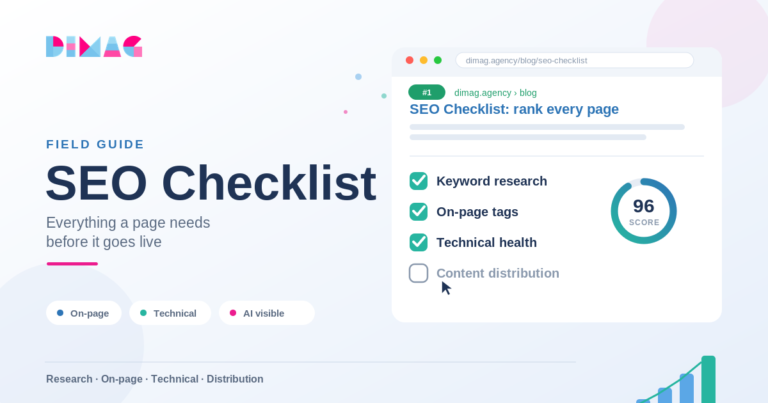
An SEO checklist is a structured set of steps that guides a page from research to publication so it can rank in search. It usually covers keyword research, search intent, on-page tags, technical health and content distribution. The result is one repeatable standard that writers and editors can follow on every page they create.
Most search engines weigh dozens of signals before they rank a page. An SEO checklist turns that complexity into a short, repeatable routine. Instead of guessing whether a draft is ready, a content team can run it against an SEO checklist and fix the gaps before the page goes live. The habit is simple, yet it protects quality when deadlines get tight.
Search still drives a large share of website traffic. Most journeys begin with a query, which means visibility in results is rarely optional. A reliable SEO checklist helps every article earn its place. The sections below break the process into clear stages, from keyword research through distribution, to keep the work practical rather than overwhelming.
An SEO checklist is not a creative constraint. It is a safety net that frees writers to focus on ideas, because the mechanical steps are already accounted for. The strongest content teams treat the checklist as the floor of quality, never the ceiling.
What Is an SEO Checklist and Why Does It Matter?
An SEO checklist is a structured list of the on-page and off-page steps that help content rank. It works because it converts best practice into a habit. Strong content still matters most, yet even excellent writing underperforms when the basics are skipped. The real value of an SEO checklist is consistency, since it makes sure no important step is forgotten under pressure. It also shortens the review cycle, because an editor can scan a page against a known standard instead of relying on memory.
Search engines reward content that is high quality, crawlable, demand driven, intent matched, well optimized, credible and widely shared. A good SEO checklist simply makes sure each of those seven marks is present before a page ships. When several writers follow the same checklist, every page meets one standard for keyword research, structure and technical health. That consistency is what compounds into long term organic growth.
What Belongs on the Keyword Research SEO Checklist?
Research is the first stage of any SEO checklist, because it decides whether a topic can realistically earn traffic. The keyword research portion of an SEO checklist focuses on demand, difficulty and angle. A team identifies two or three target keywords, checks search volume and studies which pages already own the results before committing to a draft.
The same stage also looks beyond single terms. A thorough SEO checklist captures long-tail keyword variations and the questions an audience asks most often, since those phrases reveal a sharper angle and usually face less competition. Strong keyword research at this point saves wasted effort later.
How does search intent refine keyword research?
Keyword research answers what people search, while search intent answers why. The intent stage of an SEO checklist asks whether a query is informational, commercial or navigational. Matching the page format to that search intent is often the difference between ranking and stalling. For that reason the checklist treats search intent as a separate, deliberate check rather than an afterthought.
What Are the On-Page Steps in an SEO Checklist?
On-page work is the heart of the checklist, since it shapes how a single page communicates relevance. The on-page SEO steps below cover the elements an editor can control directly before publishing. Each one is small on its own, yet together they give strong content the clarity it needs to rank.
- Title tag. Place the primary keyword near the front and keep the tag under about 60 characters so it shows in full on the results page.
- Meta description. Write a clear summary under 160 characters that includes the primary keyword and one secondary keyword.
- Headings. Use a single H1 with a logical H2 and H3 structure that signals the topic to readers and to search crawlers.
- Image alt text. Describe each image plainly and include a relevant keyword wherever it fits naturally.
- Internal links. Point to related pages with descriptive anchor text so authority flows across the whole site.
- Structured data. Add schema markup so search engines can label FAQs, products or articles correctly.
- Content depth. Match length to intent and cover the topic fully rather than padding a page to hit a word count.
Running these on-page SEO steps as part of the checklist keeps optimization disciplined. None of them replace good writing. That order matters, because the SEO checklist exists to support quality content rather than substitute for it. A quick scan of the live results before drafting also helps, since it shows whether search favors long articles, product pages or a featured answer box for the term.
What Does a Technical SEO Checklist Cover?
Technical health is the foundation that the rest of the SEO checklist sits on. If a page cannot be crawled or loads slowly, even perfect on-page work struggles to rank. The technical portion of an SEO checklist confirms that search engines can reach, render and index the page without friction.
Which technical SEO checks matter most?
The core technical SEO checks include crawlability, mobile friendliness, page speed and a secure HTTPS connection. A complete SEO checklist also verifies clean URLs, a working XML sitemap and the absence of broken links. These items rarely change overnight. A quarterly pass through this part of the list is usually enough to keep the foundation solid.
A short note on tooling helps here. Free tools such as a search console and a basic site audit crawler surface most technical SEO problems quickly, which means an SEO checklist does not demand expensive software to run well. The aim is steady monitoring rather than a single, one time fix that is never repeated.
How Does Distribution Complete the SEO Checklist?
Publishing is not the final step of the SEO checklist. Search engines reward content that people actually read and share. Distribution therefore belongs on the list. The amplification stage of an SEO checklist covers email, social media and outreach that can earn backlinks from credible sites.
Outreach does not need to be elaborate. A short note to a relevant publication, a partner cross-link or an internal newsletter mention can each move a new page toward the authority it needs. Backlinks and brand mentions signal that authority, which is why distribution sits inside the SEO checklist rather than outside it. Those same signals feed the authority that AI search systems rely on when they choose which sources to cite. In that way the list now serves both classic and AI search.
What Is the Bottom Line on the SEO Checklist?
The bottom line is that an SEO checklist turns scattered best practice into a repeatable system. It does not promise a ranking, since competition and authority always play a role. What it does promise is that no controllable factor is left to chance before a page is published. Even a simple version, kept to a single page, beats an elaborate process that no one follows.
Used consistently, the SEO checklist becomes second nature. Over time a content team stops reading it line by line, because the steps are already built into how every page is researched, written and shipped. That is the point where an SEO checklist stops being a document and becomes a way of working. A living checklist is also worth revisiting once or twice a year, since search guidance shifts and new content formats keep appearing.
Frequently Asked Questions
What should a basic SEO checklist include for a small business blog?
A basic SEO checklist covers keyword research, search intent, on-page tags, internal links and a quick technical health review before publishing.
How often should a technical SEO checklist be reviewed for an ecommerce website?
A technical SEO checklist is usually worth reviewing each quarter, plus a fresh check after any major site migration or template change.
Does an SEO checklist help content rank in AI search results as well?
Yes, a strong SEO checklist builds the authority and structure that AI search systems use when they select and cite sources.
Which on-page SEO checklist items matter most for new product pages?
Title tags, descriptive headings, unique meta descriptions and structured data tend to matter most for new product pages in competitive niches.
How does keyword research fit into an SEO checklist for beginners?
Keyword research sits at the start of the SEO checklist, since it confirms demand and difficulty before any writing begins.
Can a single SEO checklist work across different industries and content types?
Yes, the core SEO checklist stays consistent across industries, though keyword research and intent details shift with each audience.
How long before an SEO checklist improves organic traffic for a website?
Timelines vary with competition and authority, though disciplined use of an SEO checklist tends to compound results over several months.
