

Most Bangalore businesses running Google Ads follow the same pattern. Campaigns get set up, budgets get spent, agencies send polished reports showing click-through rates and impressions, and everyone assumes the system is working. Until someone in leadership asks the only question that matters: how many paying customers did Google Ads actually produce this quarter?
That question tends to create uncomfortable silence. Not because Google Ads failed, but because nobody built the system to answer it.
The best PPC company in Bangalore is not the one that generates the most clicks. It is the one that builds a traceable path from every search query, through every click, past every landing page, into the sales pipeline, and all the way to a closed deal. That level of accountability separates agencies that manage campaigns from agencies that engineer revenue.
This guide covers exactly what makes a PPC company in Bangalore worth hiring, the five patterns that separate high-performing Google Ads accounts from budget-draining ones, how to evaluate agencies before signing, and what realistic campaign timelines look like from launch through optimization maturity.
Why Google Ads Campaigns in Bangalore Underperform Despite High Budgets
Google Ads is the most intent-rich advertising platform available. People type exactly what they want into a search bar, and Google places your ad at the precise moment they are ready to take action. The platform delivers. The execution almost always falls short.
Three structural failures explain why PPC campaigns managed by agencies in Bangalore consistently underdeliver on revenue.
Passive Campaign Management
Google Ads operates on a dynamic auction system. Competitor bids shift daily. Seasonal demand fluctuates. Algorithm updates change delivery patterns. Campaigns that get reviewed once a week miss thousands of micro-optimization opportunities. Bid adjustments by time of day, device type, geographic cluster, and audience behavior segment need daily attention to prevent budget waste.
Misdirected Traffic
When ad clicks land on a homepage or generic service page, visitors are forced to navigate through irrelevant content to find what the ad promised. Most leave within seconds. Every campaign needs dedicated landing pages matched to the specific ad copy and keyword intent that triggered the click. Without this match, conversion rates collapse and cost per acquisition inflates.
Invisible Budget Leakage
Without a rigorously maintained negative keyword list, ads appear for searches completely unrelated to the business. Audits of Bangalore B2B accounts consistently reveal that 25 to 35 percent of monthly ad spend goes to queries from job seekers, students, people searching for free alternatives, and unrelated services triggered by broad match keywords.
What Defines the Best PPC Company in Bangalore
The word "best" gets applied loosely in Bangalore's agency market. In paid search, it has a specific, measurable definition: highest return on ad spend combined with the lowest sustainable cost per acquisition, maintained over time through systematic optimization.
A Google Ads campaign contains at least seven interconnected components: keyword architecture, match type strategy, negative keyword management, ad copy, bidding logic, landing page experience, and conversion tracking. These components function as a system. Changing one affects the others. Ignoring one causes the system to leak budget in ways that surface-level reporting cannot detect.
Revenue System vs Campaign Collection
The best PPC company in Bangalore treats an ad account as a revenue system, not a collection of individual campaigns. Every keyword exists because it maps to a documented buyer intent. Every ad exists because it qualifies the right visitor and filters out unqualified ones. Every landing page exists because it is engineered to convert a specific audience with a specific need at a specific stage of their buying process.
When all seven components operate as an integrated system, Google Ads becomes a predictable, scalable customer acquisition channel. When they operate independently, the result is media spend with reporting attached.
Five Patterns That Separate Revenue-Generating PPC From Budget-Draining PPC
Auditing more than 40 Google Ads accounts across Bangalore businesses in SaaS, healthcare, eCommerce, real estate, and professional services reveals consistent patterns. Accounts that produce traceable revenue share five characteristics. Accounts that consume a budget without clear outcomes are missing at least three.
Pattern 1: Intent-Based Keyword Architecture
This means keyword groups organized by buyer readiness, not by topic similarity. Someone searching "what is PPC" has completely different intent than someone searching "best PPC company in Bangalore." They need different ads, different landing pages, and different conversion paths. Mixing both into a single ad group guarantees that at least one audience sees an irrelevant message, wasting budget on mismatched experiences.
Pattern 2: Filtering Ad Copy
Not all clicks hold equal value. A click from someone who will never become a customer costs the same as a click from an ideal buyer. The best Google Ads agencies in Bangalore write ad headlines and descriptions that pre-qualify visitors before they click. If a company serves enterprise clients, the ad communicates that clearly. Every unqualified click prevented is budget redirected toward a qualified one.
Pattern 3: Post-Click Obsession
Industry benchmark data consistently shows that top-performing landing pages convert at nearly three times the average rate. The performance gap rarely originates from the ad. It originates from what happens after the click. A dedicated landing page that mirrors the specific ad copy, targets the specific keyword, and presents a specific offer outperforms generic pages in virtually every controlled test. Despite this, most PPC agencies in Bangalore still route paid traffic to homepages.
Pattern 4: Pipeline-Connected Conversion Tracking
Standard conversion tracking counts form submissions and phone calls. Pipeline-connected tracking follows what happens next: did the sales team engage the lead, did the lead progress through qualification stages, did the deal close, and what was the revenue value? Without this downstream visibility, campaigns optimize for lead volume rather than lead quality and revenue contribution.
Pattern 5: Revenue-Linked Reporting
Impressions, clicks, click-through rate, and even cost per lead are intermediate metrics. The numbers that determine whether Google Ads is working for a business are cost per customer acquisition, return on ad spend, total pipeline value generated, and revenue attributed to paid search. If monthly PPC reports do not include revenue data, the reporting documents activity rather than proving value.
How to Evaluate a PPC Agency in Bangalore Before Committing Budget
Five questions consistently separate agencies with genuine paid search capability from agencies with well-designed pitch decks.
Do They Audit Before Proposing?
Any PPC company in Bangalore worth engaging will request read-only access to the Google Ads account before the first strategic discussion. They need to examine keyword architecture, match type deployment, search term quality, landing page configurations, and conversion tracking accuracy. An agency that presents a strategy without reviewing account data has standardized its recommendations before understanding the specific situation.
Who Manages Your Account Daily?
The strategist who leads the pitch meeting is rarely the person who operates the account day to day. Ask for the name, experience level, and certification status of the assigned account manager. Ask how many accounts that individual manages simultaneously. When one person manages 25 or more accounts, each account receives minutes of daily attention rather than the sustained focus that meaningful optimization requires.
What Bidding Strategy and Why?
Manual CPC, enhanced CPC, target CPA, target ROAS, and maximize conversions each serve different business situations with different trade-offs. A competent PPC agency in Bangalore will explain which strategy applies to your business model, sales cycle, and conversion volume. Agencies that default to maximize clicks without discussing alternatives have prioritized simplicity over performance.
Do They Own the Landing Page Experience?
When the response involves recommending changes to existing pages rather than building and testing dedicated pages, the agency manages only half the conversion system. The ad and the landing page function as a single unit. Optimizing one while neglecting the other limits what the overall system can achieve.
Can They Show a Real Search Term Report?
Not a case study. Not a testimonial. An unedited search term report that reveals the real quality of traffic the agency drives. Clean reports with high query relevance and minimal irrelevant impressions indicate disciplined management. Reports filled with junk queries indicate the opposite.

What a Properly Managed PPC Campaign Looks Like Month by Month
Google Ads delivers visibility immediately. Ads can appear within hours of launch. However, immediate visibility is not the same as optimized performance. Understanding realistic timelines prevents both premature disappointment and extended tolerance for underperformance.
Weeks 1 Through 4: Infrastructure Phase
Campaign structure gets built around documented keyword architecture. Dedicated landing pages get deployed for each primary keyword cluster. Conversion tracking gets implemented and tested across form submissions, phone calls, and CRM integration points. Data begins accumulating. This phase builds the measurement foundation that everything else depends on.
Months 2 and 3: Optimization Phase
Search term reports identify which queries convert and which consume budget without results. Negative keywords get added on a rolling basis. Ad copy variations get tested across headlines, descriptions, and calls to action. Landing page elements get tested: form fields, headline messaging, trust signals, and button placement. By the end of this phase, cost per acquisition should show a consistent downward trend.
Month 4 Onward: Maturity Phase
Bidding strategies transition from manual to automated as the system accumulates sufficient conversion data for machine learning to function effectively. Remarketing campaigns re-engage visitors who did not convert on initial visits. New keyword opportunities emerge from search term data analysis. Each month of accumulated data sharpens the following month's targeting precision and budget allocation.
The compounding effect in well-managed accounts is measurable. A systematically optimized Google Ads account improves over time as data volume increases the accuracy of automated bidding, audience targeting, and budget distribution decisions.
Common Mistakes That Makes PPC Performance in Bangalore
Several recurring errors appear across Bangalore PPC accounts regardless of industry or budget size.
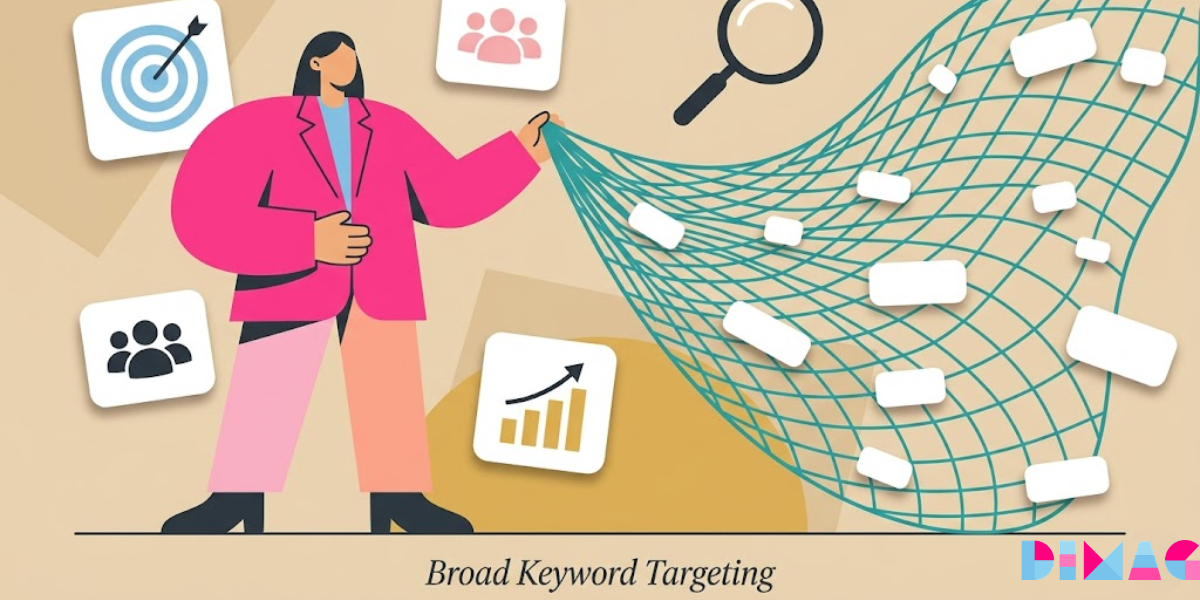
Broad Keyword Targeting
Bidding on short, generic terms attracts traffic from people researching careers, seeking educational content, or looking for services the advertiser does not offer. Specific, multi-word keyword phrases that signal purchase intent outperform generic terms in both conversion rate and cost efficiency across every industry vertical.
Mobile Experience Neglect
The majority of local business searches originate from mobile devices. Landing pages that load slowly on mobile connections, display poorly on smaller screens, or present lengthy forms create friction that causes most paid visitors to abandon before converting. Mobile experience testing and optimization should precede any budget increase.
Missing Call Tracking
A significant percentage of high-value prospects, particularly in professional services, prefer phone calls to form submissions. When campaigns cannot attribute phone conversions to specific keywords and ads, optimization relies on incomplete data. This gap systematically undervalues phone-generating keywords while overweighting form-generating keywords.
Premature Campaign Abandonment
Google Ads requires a data accumulation period where the algorithm identifies patterns in which searchers convert and adjusts delivery accordingly. Campaigns typically need 30 to 45 days and a minimum conversion threshold before performance stabilizes. Making dramatic changes or shutting down campaigns based on the first two weeks of data discards the investment made in the learning phase.
How DiMag Can Help
DiMag builds PPC systems, not standalone campaigns. Every engagement starts with a complete account audit examining keyword architecture, search term quality, landing page effectiveness, and conversion tracking accuracy. Campaigns get rebuilt as integrated revenue systems where every component works together to produce traceable business outcomes. Daily optimization, weekly search term management, and monthly strategic recalibration are standard practice, not premium add-ons. PPC works hardest when it operates as one channel inside a coordinated digital marketing strategy that connects paid search to organic search, content and conversion optimization.
Frequently Asked Questions
Q1. How quickly can the best PPC company in Bangalore deliver measurable results?
A. Google Ads generates visibility within 24 hours of campaign launch. Performance optimization typically requires four to six weeks of systematic testing across ad copy, keyword targeting, and landing page conversion rates. Most businesses see consistent cost per acquisition improvement within the first 60 days of professionally managed campaigns.
Q2. How can a business tell if its PPC company in Bangalore is wasting ad budget?
A. Three indicators reveal budget waste: the search terms report contains significant irrelevant queries, ads direct traffic to the homepage or generic pages instead of dedicated landing pages, and monthly reports focus on impressions and clicks rather than cost per acquisition and return on ad spend.
Q3. Is Google Ads effective for small businesses in Bangalore?
A. Highly effective when campaigns are precisely targeted. Small businesses benefit most from focused campaigns built around high-intent keywords with clear purchase signals. Starting with the single highest-converting service offering, proving return on investment on a controlled budget, and scaling based on documented performance data produces consistently strong outcomes.
Q4. What is the difference between PPC and SEO for Bangalore businesses?
A. PPC delivers immediate search visibility but costs reset when spending stops. SEO requires months of sustained effort but generates compounding organic traffic that continues growing even as investment stabilizes. Most Bangalore businesses achieve the strongest combined results by running PPC for immediate lead generation while building SEO and AI search optimization as the long-term organic growth channel that captures both traditional Google rankings and AI answer traffic.
Q5. When should a Bangalore business manage Google Ads internally versus hiring an agency?
A. Basic local campaigns using Google Smart Campaigns can work with internal management. Beyond that complexity threshold, the simultaneous demands of keyword bidding, negative keyword management, ad copy testing, landing page optimization, and conversion tracking make professional management consistently more cost-effective. Skilled agency optimization typically recovers its own cost through reduced waste and improved conversion rates.
Q6. What makes DiMag different from other PPC agencies in Bangalore?
A. DiMag treats PPC as a revenue system rather than a media buying service. Every campaign includes pipeline-connected conversion tracking that follows leads from initial click through to closed deal. AI-powered bid optimization combines with dedicated landing page engineering and daily search term management. Reporting centers on revenue metrics rather than activity metrics.
Related ReadingFor a deeper dive read Google Ads for Clinics: Patient Acquisition Playbook, part of the DiMaG cluster on this topic.
